
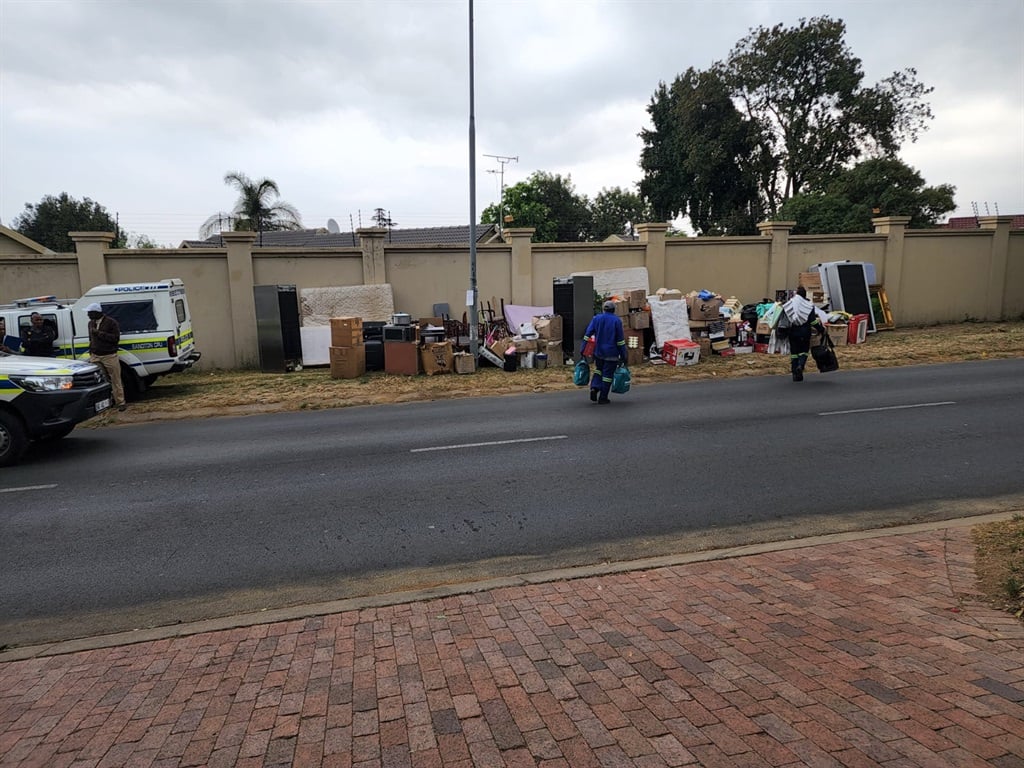
“Boomed areas” with restricted access became a popular mechanism used by homeowners who are concerned about the safety of their neighborhoods and to protect the value of their properties. However, the occurrence of squatters just outside of boomed areas where homeless people occupy public land has increased dramatically over the years. One needs to have sympathy with the social and economic circumstances that lead to so many people being destitute, but the reality is that squatting on public land is unsightly and, in many cases, results in the rise of crime (especially drug use).
According to the Constitution, no one can be evicted from their “home” or have their “home” demolished without an order of court. It doesn’t matter whether the “home was established lawfully or unlawfully. Since the government is the “owner” of public land, the onus rests on it to act. Once someone has erected a shack, it becomes a “home”, and the government needs a court order under the PIE Act to evict the person and demolish the shack. In the matter of Ngomane and Others v City of ohannesburg Metropolitan Municipality and Another the Supreme Court of Appeal ruled that when a structure is erected and taken down each day, it will not constitute a “home” under the PIE Act. Structures out of cardboard that are erected each day and then taken down just to be put up again, will not be a “home”.
Time is of the essence in squatter cases. The Western Cape High Court found that a structure that had only been occupied by homeless people for 24 to 48 hours was their “home” and that they could not be evicted without a court order in terms of the PIE Act. If the government acts immediately, it can use the principle of counter-spoliation to eliminate interference with the possession of public property. This means it must act before the squatter can claim that he established a “home. If it takes too long, a court order is required. If the government succeeds in legally removing squatters without a court order, it still must provide emergency housing or accommodation to people who are removed.
The information provided in this article does not, and is not intended to, constitute legal advice; instead, all information, content, and materials available in this article are for general informational purposes only. Readers of this article should contact us or any other attorney to obtain advice with respect to any particular legal matter. No reader, user, or browser of this article should act or refrain from acting on the basis of information on this article without first seeking legal advice. Only your individual attorney can provide assurances that the information contained herein – and your interpretation of it – is applicable or appropriate to your particular situation. All liability with respect to actions taken or not taken based on the contents of this article are hereby expressly disclaimed. The content on this posting is provided “as is;” no representations are made that the content is error-free.